
English wine | From proving a point to telling a story
20th February 20264 min read
The UK is one of the world’s great wine-drinking nations - and yet we produce just 0.5% of what we drink. That imbalance is beginning to shift.
- Vineyards
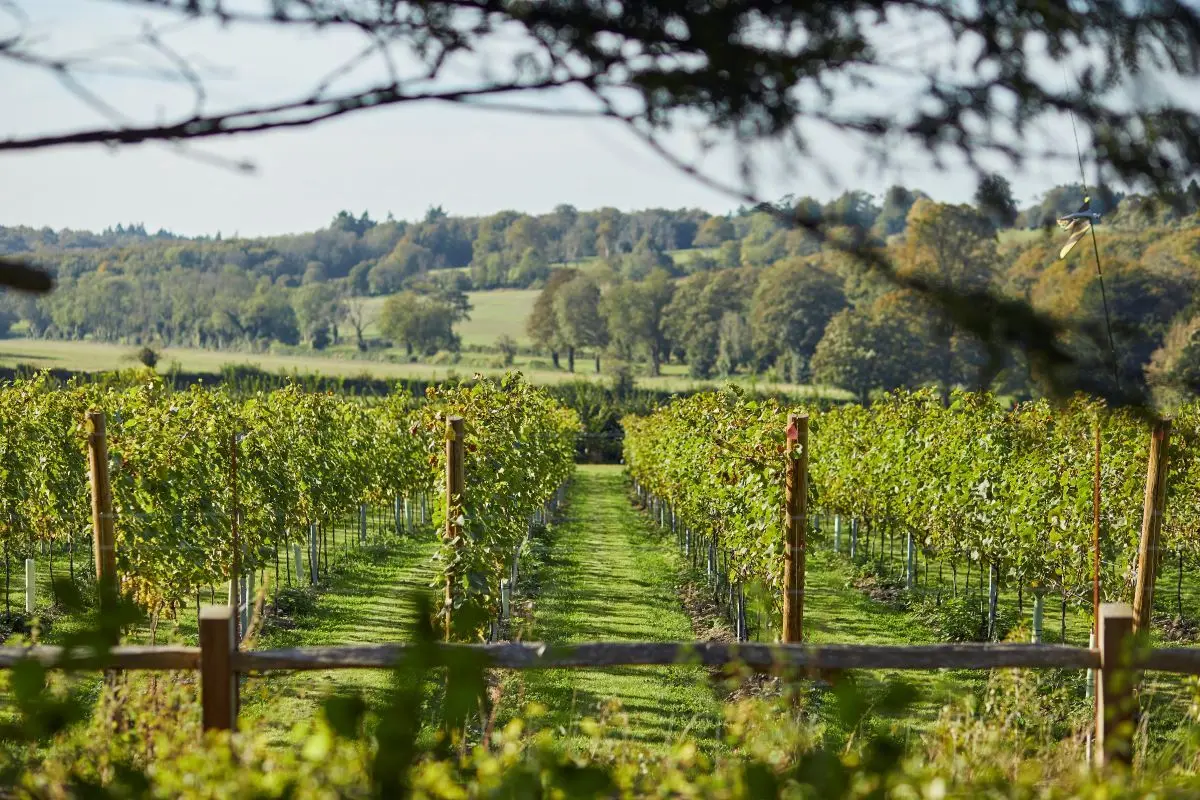
According to our latest Viticulture Land report (UK winery numbers surge by more than a third in just five years), the 2023 harvest was one of the largest on record, producing around 22 million bottles, while in 2024 the total vineyard area reached 9,300 acres, with a further 1,000 acres expected to come into production. Confidence, it seems, is quietly spreading across the English wine landscape – and, increasingly, onto wine lists and into cellars. But while production has gathered pace, the conversation has moved on. The question is no longer can England make good wine? That debate has largely been settled, it can. Now attention has turned to something more nuanced: how does English wine define itself?
Beyond the vineyard
Many producers now find themselves navigating what might best be described as a ‘marketing Bermuda triangle’ - pulled between direct-to-consumer sales, traditional wholesale routes, and tourism-led experiences.
For the drinker, English wine has increasingly appeared as a local curiosity, or be closely tied to a particular place or experience. Context becomes part of the proposition - not just what is in the glass, but where and how it is encountered. Whilst the cost of managing vines in England is similar to those of long-established regions, yields from English vineyards in our cool climate remain comparatively low, making the fruit more expensive to produce. The result is a sector where margins are tight and differentiation matters.
In this context, the future of quality English wine depends as much on storytelling, identity and confidence of voice as it does on soil type or grape variety. Terroir still matters - but so does knowing your brand. We recently sat down with The Pig Hotel Group, who have recently become English Wine producers, to explore their brand position:
The Pig Hotel
Few hospitality brands have embedded provenance into their identity quite as thoroughly as The Pig Hotel Group. Known for its “home-grown in every sense” philosophy, the group bottled its first English wines in 2024 - grown on a field at its South Downs hotel where alpacas once grazed.
The resulting wines, Alpaca Block Chardonnay and Alpaca Block Field Blend Rosé, now feature across the group’s hotels, joining wine lists that already showcase more than 50 English varieties.
For Luke Harbor, Group Beverage Director, this was about “closing the loop” - growing, making and pouring their own wines as an extension of a wider food and drink philosophy.
Crucially, these wines do not arrive as a novelty or side project. They sit comfortably alongside kitchen gardens, 25-mile dinners with notable chefs and a long-established emphasis on local produce. The wines reinforce what guests already understand about The Pig - that what is on the table is shaped by place, season and proximity.
In this setting, English wine becomes less of a statement and more of an inevitability: a continuation of a story their guests are already part of.
What’s next for the sector?
There is broad agreement that English wine has moved beyond the experimental phase. As Nick Watson, Head of Viticulture, notes, “we know that the UK can produce world-class wines - that’s proven.”
The challenge now lies elsewhere. “The issue is no longer agronomic, but commercial,” he says, pointing to the need for stronger marketing and sales strategies if the sector is to increase its domestic market share.
A more coordinated national approach - with shared investment and increased collaboration - could help shift English wine from a niche interest into a recognised category. As Nick explains, “there is a real opportunity to grow the domestic market if the industry can work together more effectively.”
As the sector matures, attention is also turning to the fundamentals of running a resilient business. “There needs to be a greater focus on professional business planning,” he adds, particularly around managing cash flow and planning for seasonal variability.
Overlaying all of this is the growing influence of climate change - both as an opportunity and a challenge. “In terms of quality, climate change suggests our best years may still lie ahead,” Nick says. “But at the same time, we are seeing much greater volatility during the growing season.”
The next chapter for English wine, then, will be shaped not just by what can be grown, but by how confidently the sector defines itself - commercially, collectively and with a clear sense of identity.