
Rathfinny: Building a world-class sparkling wine business
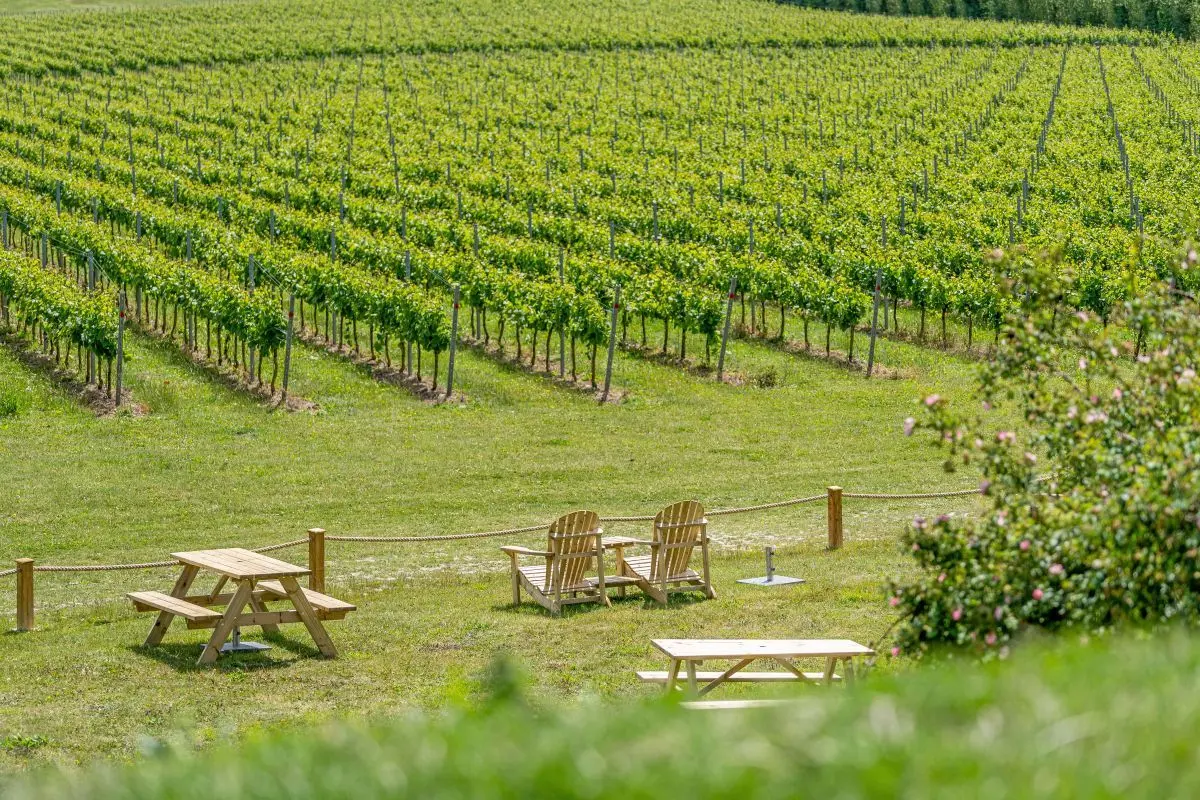
Sixteen years ago, we helped Mark Driver and his wife Sarah buy an arable farm in East Sussex with the vision to create one of England’s leading sparkling wine estates. Today, Rathfinny Wine Estate employs the equivalent of more than 70 full-time staff, welcomes around 60,000 visitors a year and exports its wines globally.
But Mark’s ambitions go much further. Within twenty years, he hopes Rathfinny will be a familiar name on wine lists in restaurants, pubs and hotels around the world, recommended alongside – or even ahead of - champagne.
We always used the phrase that in twenty years’ time you’ll walk into a bar in New York, Tokyo or Beijing and be asked “would you like a glass of champagne or a delicious glass of Sussex. I can recommend the Rathfinny.”
We were fortunate enough to sit down with Mark to talk about his strategy for building Rathfinny into a global wine brand, the realities of running a vineyard and why he believes southern England has the potential to establish itself as one of the world’s leading sparkling wine regions.
Rathfinny has deliberately positioned itself at the premium end of the market. Was that always the plan?
We only make vintage traditional-method sparkling wines and we deliberately give them considerable time in bottle. We are only now releasing our 2020 wines, and we want that additional bottle age because it brings greater complexity.
Around 80% of what we sell through the trade goes into the on-trade – hotels, bars and restaurants – rather than supermarkets. We work with independent wine merchants and some wonderful restaurants and hotels because those are places where people understand and value what we are making.
English sparkling wine can look expensive if you compare it simply with a bottle of inexpensive fizz. But if you compare a properly aged vintage English sparkling wine with an equivalent-quality vintage Champagne, the value equation looks completely different.
One of the challenges for our industry is helping consumers understand that distinction.
You’ve been particularly successful overseas. How did markets such as Japan and Norway develop?
During lockdown, we worked hard to find a distributor in Norway who understood what we were trying to do. That relationship has grown enormously.
Our wines are now served aboard Hurtigruten cruise ships along the Norwegian coast, and they do something wonderfully eccentric with some of our wine. They age bottles underwater in the Arctic Circle. The wine is kept at a constant temperature of around five or six degrees before being brought back up and served aboard the ships.
Japan happened rather by chance. Our wine distributor in Canada visited Rathfinny and introduced us to his ‘brother’ who is involved with leading Champagne and Burgundy producers importing their wines into Japan. He happened to be in Chile when we spoke. He effectively said: “I can fly the other way home - can I come and see you?”
He flew to Heathrow, came down to Rathfinny, saw the vineyard and tasted the wines and immediately understood what we were trying to achieve. We’ve now worked together for several years and Rathfinny is served in the Japan Airlines First Class Lounge, as well as leading hotels and restaurants across Japan.
Once people understand the quality of English sparkling wine, the reaction can be extraordinary.
What is stopping English wine becoming a much bigger export story?
We need much more coordinated support. If you look at countries such as New Zealand and Australia, or regions such as Champagne and Bordeaux, there has historically been a strong effort to promote their wines internationally.
English wine producers are increasingly going overseas and doing that work themselves. At Wine Paris this year, there were around 20 English producers exhibiting. We had a Wines of Great Britain presence, but around us were regions with enormous stands and very visible national backing.
I find it frustrating because English wine is an extraordinary agricultural success story. Across the country, vineyards are creating employment, encouraging tourism, generating tax revenue and creating a product that can be exported around the world.
We have an industry with enormous potential. I would like government to recognise that and help us tell the story internationally.
How much has the quality of English wine changed since you started?
When we started 15 or 16 years ago, there was a lot of bottle variation across the English wine industry, but that has changed enormously.
There has been substantial investment in wineries, equipment, bottling lines, temperature-controlled storage and quality control, but I also think Plumpton College deserves a huge amount of credit.
Plumpton has trained a generation of viticulturists and winemakers who are now working across the English wine industry. My former lecturer Tony Milanowski is now our winemaker, and people such as Chris Foss played an enormous part in establishing that expertise.
What has been the biggest challenge in the vineyard this year?
I would say climate is the biggest challenge - We’ve owned the farm for 16 years and if you speak to farmers around here who have been farming for decades and they will tell you that this has been one of the strangest periods of weather they can remember.
The biggest thing is the variability. You can have incredibly hot summers followed by incredibly wet ones. That presents completely different challenges for a vineyard. We are constantly looking ahead at what the weather is going to do and protecting against the diseases and pests that those conditions bring.
Rathfinny escaped the late spring frost this year. How significant was that?
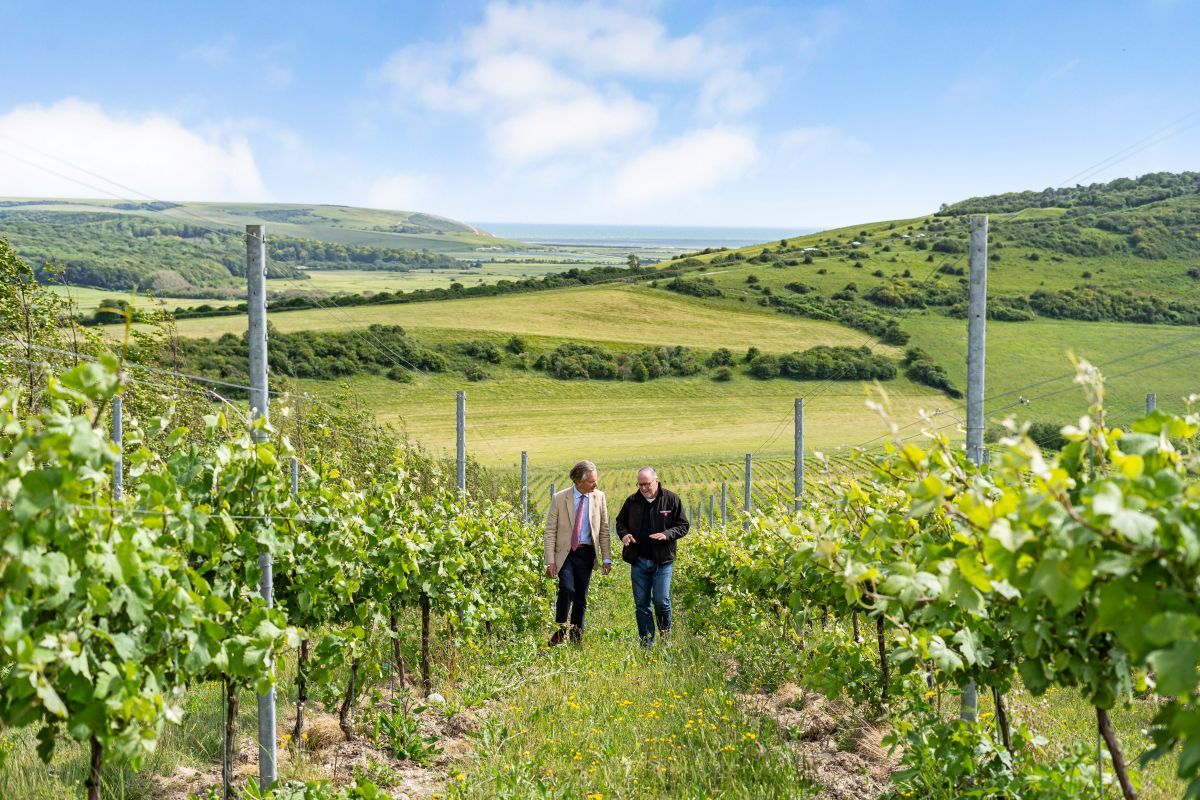
We’re only about three miles from the sea and that proximity gives us a degree of protection because the English Channel helps moderate the temperature. We heard horrendous stories of vineyards in parts of Sussex, Hampshire and Kent being badly affected by late spring frosts. Some lost a very significant proportion of their crop.
I asked our vineyard manager how many vines we had lost and he said around ten – that’s out of approximately 380,000, so we were extraordinarily lucky.
There is an old saying that the Romans planted vines within three miles of the sea. I suspect they were thinking more about the Mediterranean than the English Channel, but it seems to work.
Are warmer conditions creating new problems as well as opportunities?
We’re beginning to see pests that historically weren’t much of an issue here. Spotted wing drosophila is one example, and we are also seeing moth activity earlier. We put traps out and monitor things very closely.
Then you have mildew pressures. Cool nights can increase the threat of downy mildew, while warmer, damper conditions can bring powdery mildew. The vineyard team is constantly thinking two or three steps ahead.
Although warmer weather can be very positive in terms of ripening, climate change doesn’t simply mean hotter summers and better grapes. It means greater extremes and greater unpredictability.
Another major pressure for businesses has been the rising cost of employment. What has that meant for you?
Recent changes to employment costs increased our wage bill by more than 20% in a single year. That is an enormous increase for any business, but particularly for a vineyard because viticulture is very labour intensive. We have had to rethink how we manage vines and mechanise wherever it makes sense to do so.
Winter pruning is probably the most labour-intensive period. We might have between 30 and 40 people working in the vineyard every day for around three months, and you can’t remove that process because pruning effectively sets up the crop for the following year.
We have moved from double Guyot pruning to single Guyot, in part to simplify the process and reduce the time involved. Elsewhere, we’ve invested in new trellising systems which makes lifting and positioning the foliage much quicker. We’re using electric secateurs and tying down machines.
It is about finding dozens of individual efficiencies rather than one dramatic solution.
How else have you found efficiencies?
Historically, we used around 380 km of netting across the vineyard to protect the fruit from birds. If you stretched it out, it would run from here virtually to Cornwall!
Although the netting could be laid mechanically, it still had to be clipped up by hand and the whole process took weeks. It was also plastic, so it deteriorated over time and eventually had to be replaced.
Last year, we brought in a falconer instead. He came with a team of birds including falcons, hawks, a merlin and an enormous Chilean blue eagle. The merlin would fly up and down between the vines frightening the smaller birds, while the larger birds patrolled above the vineyard.
It saved an enormous amount of labour. Sometimes the most effective form of mechanisation turns out to have wings.
Rathfinny only produces vintage sparkling wine. Why is time on the vine so important?
When you are making traditional-method sparkling wine, you’re looking for a very particular balance. Winemakers often talk about roughly 120 days between flowering and harvest. That period is important because a great deal of the flavour development comes through the skins.
We typically flower later than vineyards further south in Europe and then harvest in October. That means the grapes have longer ‘hang time’ on the vine allowing them to develop greater phenolic ripeness, whilst retaining acidity.
We don’t want enormous sugar levels because the wine will undergo a secondary fermentation in bottle. We’re normally looking for potential alcohol of around 10.5% in the base wine, while retaining that lovely natural acidity.
That combination – flavour development without losing freshness – is one of the great advantages we have here in England.
Will England increasingly have an advantage over Champagne?
Champagne makes some extraordinary wines and many English wine producers are envious of its history. But I suspect some there may now be slightly envious of our climate.
Historically, Champagne might have harvested much later in the year. Now, they can begin picking in August because sugar levels rise quickly and, more importantly, acidity starts to fall.
For traditional-method sparkling wine you need acidity because that gives the wine freshness and allows it to age. At Rathfinny, we are increasingly able to achieve ripe fruit and complexity while still retaining that natural acidity. That is an incredibly exciting combination.
It’s one reason I believe southern England has the potential to become one of the great sparkling wine regions in the world.
Sixteen years after buying the farm, has Rathfinny become what you imagined?
It has, although it has been much harder than I imagined. There’s a saying attributed to Madame Bollinger that building a global wine brand is quite simple - it’s just the first 200 years that are difficult. There is some truth in that. What we are building here is generational.
But there are moments when you realise how far it has come. Now we have vines across the landscape, new habitats, more employment and tens of thousands of people visiting the Estate every year.
When you stop and look back at what has happened in 16 years, it is quite spectacular. It has been a challenge, and it still is, but it has absolutely been worth it.
Developing any new wine region is a challenge but it’s all worth it when find your wines being poured in some of the top bars and restaurants around the world.
The last six years have been particularly challenging with COVID lockdowns, wars and the resulting inflationary pressure affecting demand and costs. But we have managed our way through that and our wine sales continue to grow year on year.