
Strutt & Parker’s new Scottish Lifestyle Survey found that the global ‘wellness’ trend was a way of life for many Scottish residents, the majority of whom thought its lifestyle and the great outdoors made it stand out from the rest of the UK.
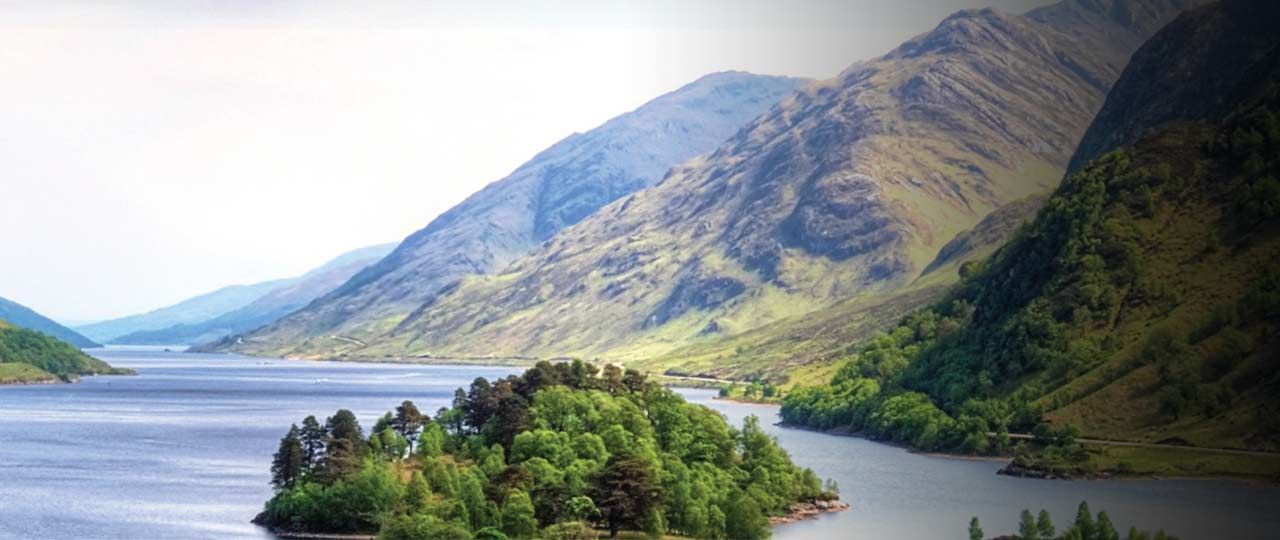
It was clear from our research* that Scotland’s stunning and abundant natural resources help in the pursuit of that state of complete physical, mental and emotional wellbeing that constitutes wellness.
The survey revealed that health, fitness and enjoying Scotland’s spectacular scenery or a combination of all three were high on the list of lifestyle highlights. This is often reflected in the premium for property located in some of the areas that promote “wellness” as a lifestyle.
At the end of December 2018, the average price of a property in Aviemore – in the heart of the Cairngorms, was £224,990, 19% above the Highland average of £188,690 while Gairloch on the west coast enjoyed a 23% premium over the Highland average. Similarly, Grantown-on-Spey had an average price of £197,385, 15% above the Moray average of £171,755. Aboyne commands a significant premium over other Aberdeenshire markets due to its beautiful location on the River Dee with prices 50% over the average Aberdeenshire price of £216,970. Picturesque Tobermory on Mull enjoyed an 8% premium over the average price of £170,380 in Argyll and Bute.
The pretty town of Pitlochry also maintains a substantial premium of 20% within Perth & Kinross with property prices averaging £236,625 at the end of 2018. Aberfeldy, also favoured for its access to the great outdoors, commands a 21% premium over the average for Perth and Kinross with an average price of £239,000. North Berwick, popular also for its commuting options as well as for its lifestyle advantages maintained a 96% premium over the East Lothian average.
The report found that people who had moved to Scotland felt happier (30%), less stressed (30%) and more active (26%). Many reported improvements in both mental health (21%) and physical health (16%) and 28% said they led a healthier lifestyle as a result of the move with a fifth eating both more fresh fruit and veg and locally-sourced meat and fish. A fifth had taken up new interests (19%).
Additionally, 63% of people described themselves as active to extremely active (7% thought of themselves as extremely active, defined as engaging in outdoors activities every day) and respondents described their lives as happy (44%), family-orientated (43%), satisfying (39%) and healthy (27%).
Long hours of sunlight during the summer prompted respondents to get outside and make the most of Scotland’s stunning outdoor space with 49% heading to the beach, 34% turning to their gardens, 20% choosing outdoor pursuits in general and 20% opting for jogging while other sports included hiking (18%), training for endurance sports such as triathlons and Iron Man (2%), golf (6%) and swimming al-fresco (5%). Others chose options that were perhaps less active but indicated a similar appreciation of the natural environment. Scotland offers many jaw-droppingly beautiful roads and 41% opted for a scenic drive. High on the list were BBQs (48%) and picnicking (37%) while 16% opted for glamping or camping and 14% chose star-gazing.
In the winter months, a third - hoping for another Beast from the East perhaps - chose playing in the snow, while 9% opted for skiing or snowboarding, 14% for ice skating and 2% for curling. Meanwhile, stargazing and searching for the Northern Lights were favoured by 15% and winter wildlife spotting by 13%.
However, it was not all about the great outdoors. Wellness is as much about a sense of emotional wellbeing and winter is arguably about shutting the doors and hiding from the outside world, perhaps creating a cosy fireside sanctuary. The survey found that 39% were keen to light the fire and “coorie in” – defined as the Scottish art of deriving comfort, wellbeing and energy from wild landscapes and convivial interiors - with 46% favouring curling up with a book.
Additionally, the wellness factor doesn’t just exist for the everyday. Underlining the popularity of ‘staycations’, 86% of respondents stayed in Scotland for some of their holidays. Of those staycationers, 48% chose to enjoy the countryside, 28% opted for sporty breaks including walking, mountain biking and running, 4% favoured snowsports and 27% headed to the beach with 7% taking part in some kind of watersports.
In January, VisitScotland published research into the wellness factor in Scottish tourism, predicting its role as a driving force in the industry this year. They discuss a ‘restorative recreation” featuring the outdoors, something our research shows clearly resonates with permanent residents as well as visitors to the country.
Kevin Maley, Strutt & Parker’s head of residential agency in Scotland, agrees. He says: “The great outdoors is a way of life for a lot of people who have made Scotland their home or are considering doing so. It is a huge draw and often a very important factor for buyers moving to the country.
“From beach walks, watersports and diving into abundant bays, rivers and lochs to long distance hikes, golf and mountain biking, Scotland has a tremendous amount to offer both permanent residents and visitors searching for that sense of wellbeing that comes from being outdoors or in tune with nature. This is particularly underlined by the fact that 86% of respondents chose to stay in Scotland for some of their holidays and the majority of those favoured an active, outdoorsy holiday.”
Download and read the Scottish Lifestyle Survey 2019 here.
* The survey, which was carried out by Atomik Research, questioned 2,000 Scottish residents about various aspects of living, working and holidaying in Scotland. Many questions asked respondents to tick all that applied and consequently will not add up to 100%.